A week of scientific exchange at the forefront of AI for chemistry
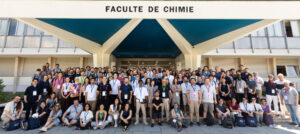
From 22 to 26 June 2026, the 10th Strasbourg Summer School in Chemoinformatics (CS3-2026) brought together 152 participants from 25 countries to explore the latest advances in chemoinformatics. Combining high-level scientific lectures, hands-on workshops and interdisciplinary discussions, this tenth edition once again confirmed its status as a leading international event while highlighting the Grand Est region’s growing attractiveness for research and education in the field.
A scientific programme aligned with the latest developments in the field
Throughout the week, participants attended plenary lectures, oral presentations, practical workshops and tutorials covering the key challenges currently shaping chemoinformatics. Topics included artificial intelligence for molecular design, the analysis of large-scale chemical datasets, emerging trends in QSAR modelling, chemical reaction mining, in silico pharmacology, and recent advances in materials informatics.
The programme featured internationally recognised experts, including Artem Cherkasov, Alexander Tropsha, José Medina-Franco, Hanoch Senderowitz and Thierry Langer, who chaired scientific sessions and shared their expertise with participants.
Alongside the scientific sessions, a series of training activities enabled attendees to deepen their knowledge of methods and tools widely used within the community. Prior to the official opening of the summer school, participants also took part in demonstrations, crash courses and a hackathon, whose outcomes were collectively discussed at the beginning of the week.
An international and interdisciplinary community
This tenth edition once again demonstrated the event’s international reach, welcoming participants and speakers from 25 countries, including Germany, Canada, the United States, Japan, Mexico, Sweden, the United Arab Emirates and the United Kingdom.
The diversity of backgrounds represented was another key strength of this edition. Alongside researchers from academia, leading organisations from the chemistry, energy and pharmaceutical sectors—including AstraZeneca, Eli Lilly, Elsevier, Sanofi, Enamine, IFP Energies nouvelles and Insilico Medicine—contributed to the discussions, fostering dialogue between public research and industry. This diversity of perspectives encouraged rich exchanges on the scientific, methodological and practical challenges driving the evolution of chemoinformatics.
Scientific discussions extending beyond the lecture hall
Beyond the formal scientific programme, the summer school placed strong emphasis on networking and scientific exchange. Poster sessions, tutorials, evening social events, the cultural programme and the gala dinner all provided valuable opportunities for participants to continue discussions, establish new collaborations and strengthen connections within the international community.
During the closing lecture, Professor Alexandre Varnek delivered a thought-provoking conclusion to the week. His presentation highlighted the importance of reflecting on the limitations of artificial intelligence while reaffirming the essential role of scientific expertise and critical thinking in the discovery process.
Supported by numerous academic and institutional partners, the 10th Strasbourg Summer School in Chemoinformatics once again confirmed its position as a major international gathering for the chemoinformatics community. By bringing together complementary expertise from multiple disciplines and countries, the 2026 edition helped strengthen scientific collaboration while further enhancing the Grand Est region’s attractiveness for research and education in this field.
Organising Committee
- Dragos HORVATH, CNRS, France
- Alexandre VARNEK – Université de Strasbourg, France
- Gilles MARCOU – Université de Strasbourg, France
- Alexey ORLOV – Université de Strasbourg, France
- Olga KLIMCHUK – Université de Strasbourg, France
- Fanny BONACHERA – CNRS, France
Partners
- Centre National de la Recherche Scientifique
- Université de Strasbourg
- Collège Doctoral Européen
- Mundus Chemoinfo+
- AIChemist
- GDR BigDataChim
- SFCi
- Cluster IA Grand Est ENACT
- Insilico Medicine
- OpenEye
Funding Partners
- Cluster IA Grand Est ENACT
- SFCi
- GDR BigDataChim